
Ugandan Designer Taps Music Festival to Promote Sustainable Fashion




Beyond music, the festival is becoming a platform for designers using indigenous materials to tap into Africa’s expanding fashion market.
Music may be the main draw at Nyege Nyege, but as several stages prepared to come alive, a quieter initiative was drawing attention from designers and sustainability advocates.
At the centre of it was Katende Godfrey, a Kampala-based designer and co-founder of IGC Fashion, a label using the festival as a platform to showcase garments made from indigenous Ugandan materials such as barkcloth, raffia, and cowrie shells. His pop-up concept, Kwetu Kwanzaa, brought together designers from across Africa to promote sustainable fashion rooted in cultural heritage.
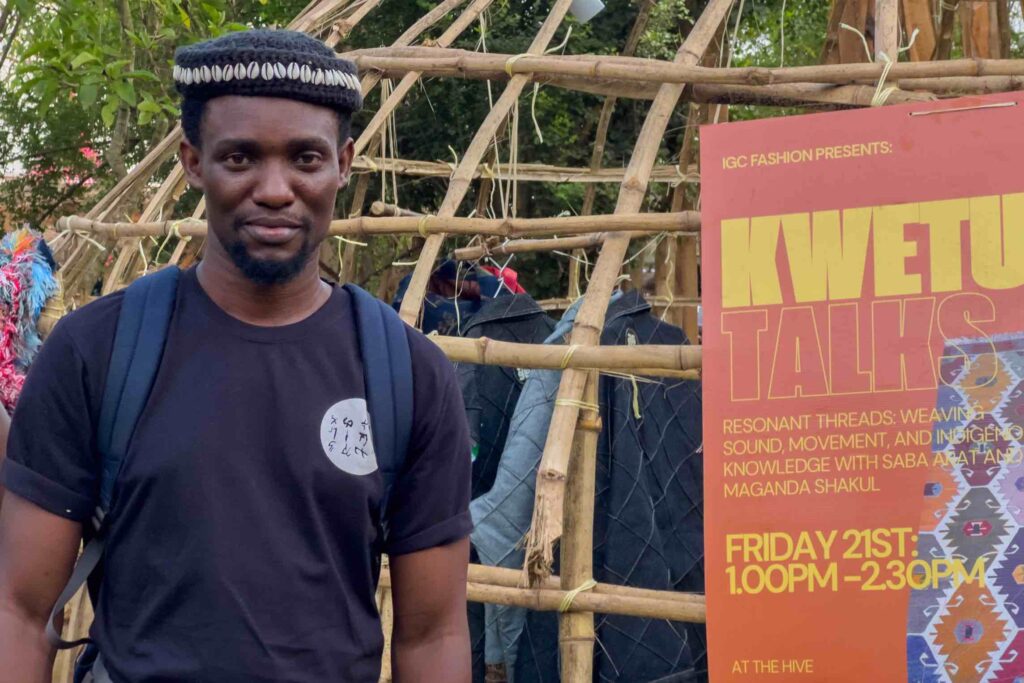
At Nyege Nyege, fashion is becoming a site where culture, sustainability, and economic opportunity converge for Africa’s next generation of designers.
“IGC Fashion is a clothing brand that makes garments out of indigenous materials sourced from Uganda,” Godfrey said in an interview. “We work with Olubugo, the barkcloth, we work with raffia and cow shells. But the reason we target these materials is to inspire people to search deeper into African culture and heritage.”
Godfrey’s work operates through two interconnected initiatives. Kwetu Kwanzaa focuses on public engagement and education, while Fashion Cypher is a vocational programme offering free tailoring workshops in underserved communities.
“As you see, there are rap cyphers, there are breaking cyphers,” he explained. “Me being self-taught and learning a lot from hip-hop communities, I realised that fashion was missing its own cyphers. So together with my co-founder Ibrahim, we created Fashion Cypher as a way to empower marginalised communities in Uganda.”
The programme brings sewing machines and designers directly into neighbourhoods, teaching basic tailoring skills at no cost. “We go into these communities with tailoring machines. We make clothes for free, and we teach vocational tailoring skills for free,” he said.
At this year’s Nyege Nyege, Kwetu Kwanzaa hosted designers from Ghana, Kenya, and Uganda.
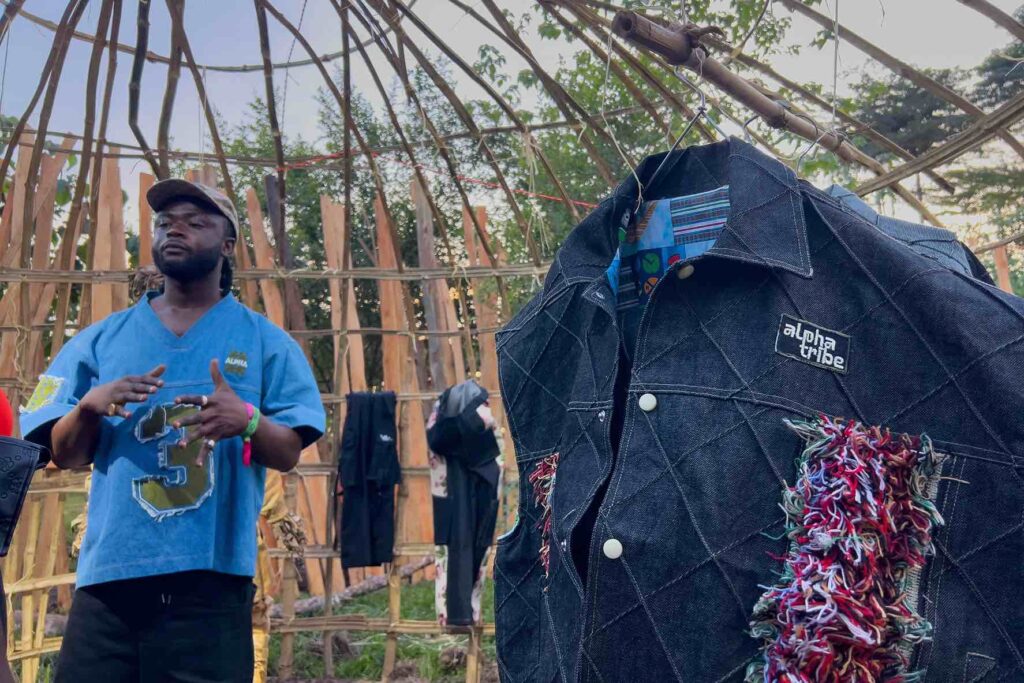
The programme included workshops on natural dyeing, screenings of short films on sustainable fashion, and live demonstrations of barkcloth production.
Barkcloth, known locally as Olubugo, is made by carefully stripping bark from a tree before wrapping the trunk in banana leaves, allowing it to regenerate.
“The bark of a tree is cut off, and the tree is covered so another layer can grow,” Godfrey said. “After nine months, the bark is full again, and that tree can be harvested for over 100 years. This is one of the most sustainable materials we have in Uganda.”

For Godfrey, the festival setting offers a rare opportunity to reach younger, more diverse audiences.
“There is already a crowd here,” he said. “Many people wear garments but aren’t conscious of the environmental impact of clothing. We want people to see these alternative materials and know they exist.”
Uganda’s fashion market is projected to generate $157.87 million in revenue in 2025, with an annual growth rate of nearly 20 percent, reaching an estimated market volume of $391.10 million by 2030, according to data from German business intelligence firm Statista. The country’s online fashion segment is also expanding, driven by mobile commerce and a youthful population.
Behind that growth is a broader shift in consumer behavior. A burgeoning middle class, rising disposable incomes, and a growing appreciation for local culture and identity are fueling demand for traditional African prints, handmade accessories, and fashion rooted in indigenous materials. For designers like Godfrey, this cultural reawakening is not only aesthetic but economic.
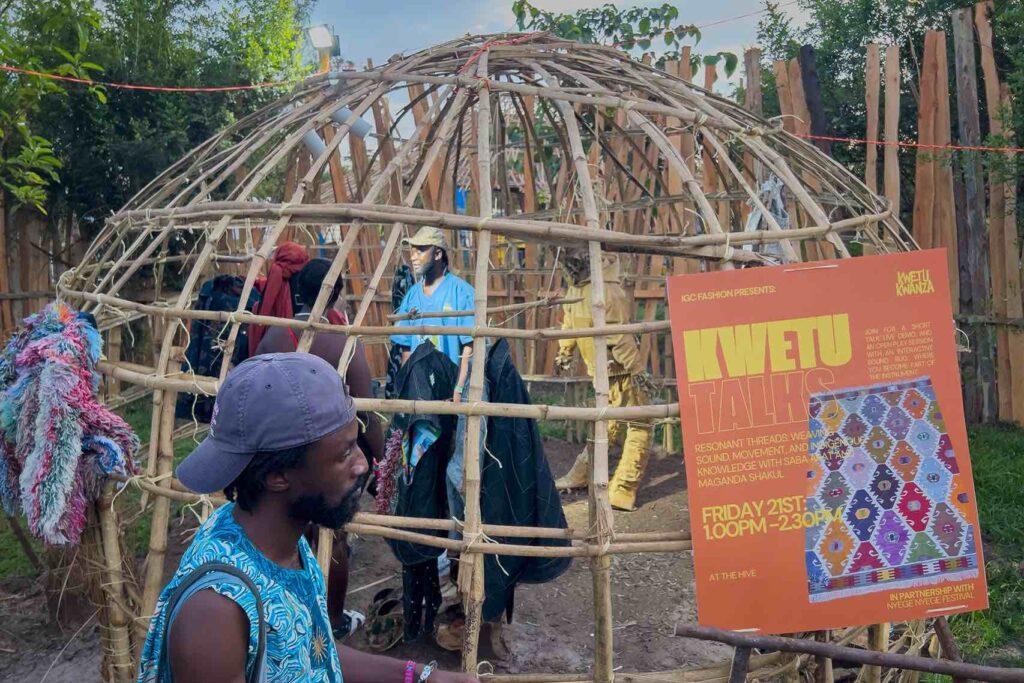
Looking ahead, Godfrey plans to expand IGC Fashion’s reach by building a pan-African hub for sustainable design.
“In the next five to ten years, I see IGC Fashion creating a hub where designers across the continent, and beyond, can learn about indigenous materials,” he said. “We already have a small fashion residency where people learn about these materials in Uganda, but it’s not enough.”