
Nigeria Turns to China to End Decades of Refinery Struggles




New MoU targets Warri and Port Harcourt restart, highlighting China’s downstream push in Africa.
By Samuel Okocha
Nigeria’s state oil company has signed a memorandum of understanding with two Chinese firms in a renewed push to restart and expand its aging Warri and Port Harcourt refineries, as Africa’s biggest oil producer seeks to bolster its fuel supply and energy security.
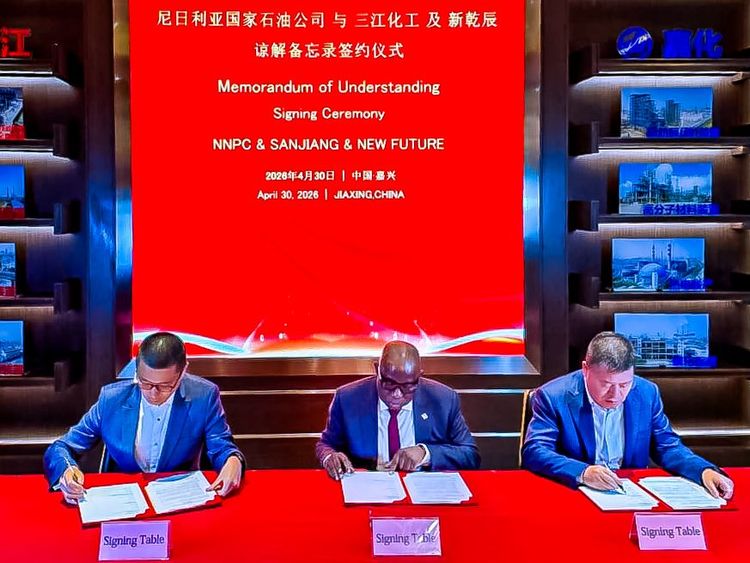
NNPC Ltd announced on May 3 that the agreement was signed with Sanjiang Chemical Company and Xinganchen (Fuzhou) Industrial Park Operation and Management Co. Ltd during a ceremony in Jiaxing City, China.
The non‑binding deal outlines a potential technical equity partnership to complete rehabilitation work, operate and maintain the facilities, and upgrade them to produce cleaner fuels that meet international standards.
The NNPC Chinese refinery partnership said contemplates expanding petrochemical capacity and developing co‑located gas‑based industrial hubs, using Nigeria’s abundant natural gas as feedstock for fertilizer, plastics and other products.
Group CEO Bashir Bayo Ojulari described the MoU as a “significant milestone” after six months of technical and management talks with the Chinese partners.
He said the parties see “mutually beneficial opportunities” for long‑term profitability and recognize the “collective weight required for success.”
Nigeria’s state refineries have struggled with aging infrastructure, poor maintenance, vandalism, sabotage, and crude supply disruptions, leading to their closure.
As a result, Nigeria, the country remained heavily reliant on fuel imports despite its status as Africa’s largest producer.
The Dangote Refinery, which began operations in 2024, has eased some pressure, but Warri and Port Harcourt remain strategic assets for domestic supply and regional exports.
In 2024, the NNPC sought bids from qualified private firms to manage operations and maintenance at its Warri, Kaduna and Port Harcourt refineries, an earlier effort to boost efficiency that has yet to deliver.
The MoU with Chinese firms form part of NNPC’s broader plan to enhance the operational efficiency of Nigeria’s refining sector, with the goal of becoming a net exporter of petroleum products.
lt also extends China’s footprint in Africa’s downstream sector.
Chinese firms are already involved in Angola’s $6 billion Lobito Refinery, where CNCEC signed the EPC contract and Sonangol is negotiating a $4.8 billion loan with Chinese lenders. In Uganda, CNOOC is a key partner in developing the Kingfisher oil field, while CPECC is building facilities for the East African Crude Oil Pipeline, backed by Chinese financing after Western lenders pulled out.
If the partnership delivers, Nigeria could cut its fuel import bill, create downstream jobs and position the coastal cities of Warri and Port Harcourt as hubs for petrochemical exports to West Africa.