Culture as Catalyst: Denmark’s Quiet Bet on Uganda’s Creative Economy




At Nyege Nyege’s tenth anniversary, diplomacy met culture, as Denmark doubled down on East Africa’s creative future.
By Samuel Okocha, On-ground Reporting, Kalagala Falls, Uganda

A Festival, A Strategy, A Statement.
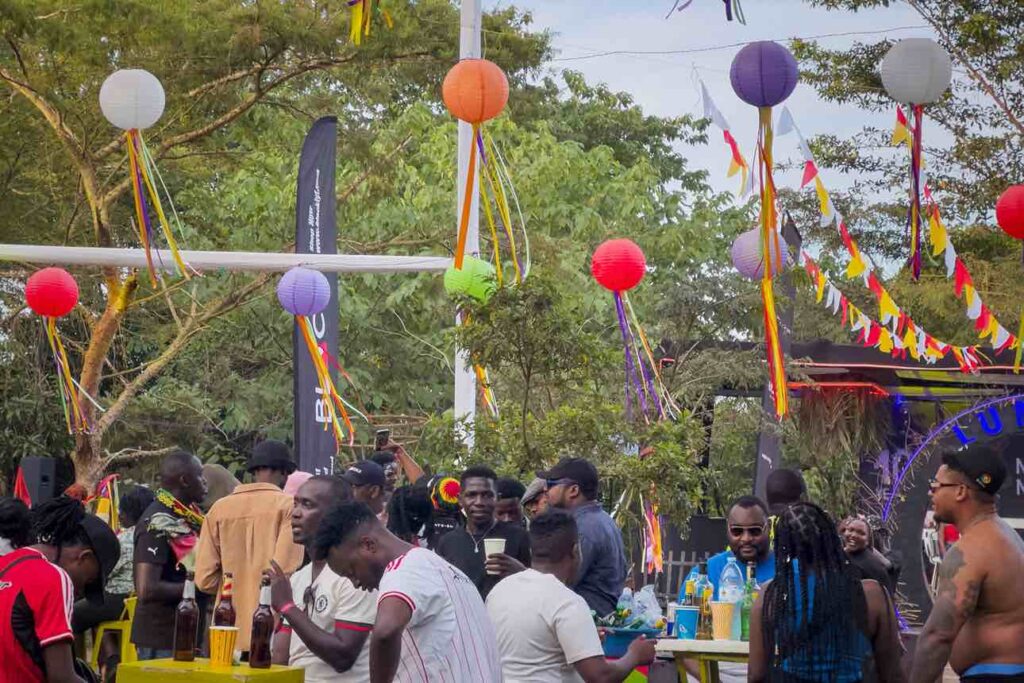
From Nov. 20-23, 2025, Uganda’s Kalagala Falls came alive with more than 300 artists as Nyege Nyege marked a decade. Global star Skrillex shared stages with local talents Kampire and DJ Travella, along with collectives like Moonshine and Maraboutage.
But amid the beats, Denmark’s embassy in Kampala launched a bold creative-industry push at the festival.
The Royal Danish Embassy partnered with organizers to debut The Hive and Africa’s first Electronic Music Conference. Both aim to foster entrepreneurship and cultural ties under Denmark’s “Africa’s Century” plan, an initiative launched in 2024 with the aim to boost ties with African countries through equal economic partnerships and investment relations.
“This week, Denmark is bringing young people together through culture—especially music—by supporting Africa’s first electronic music conference and creating The Hive, a space where creative minds can meet, connect, and spark new ideas,” Ambassador Signe Winding Albjerg said in a statement.
From Beats to Business
The Electronic Music Conference offered professional development for DJs, producers, festival curators, and cultural innovators. Sessions covered music production, distribution, artist management, and creative entrepreneurship. These areas often out of reach for emerging African artists looking to turn talent into sustainable careers.
“There’s a lot of money in Europe in music, and Uganda has a lot of talent,” said Ambassador Albjerg. “We’d really like to play our part in making sure that some of that economy also goes to Uganda.”
The goal, she added, is to help Ugandan artists become stronger and more economically viable so they can access international stages and bring value back home.
The Hive: Daytime Innovation, Nighttime Celebration
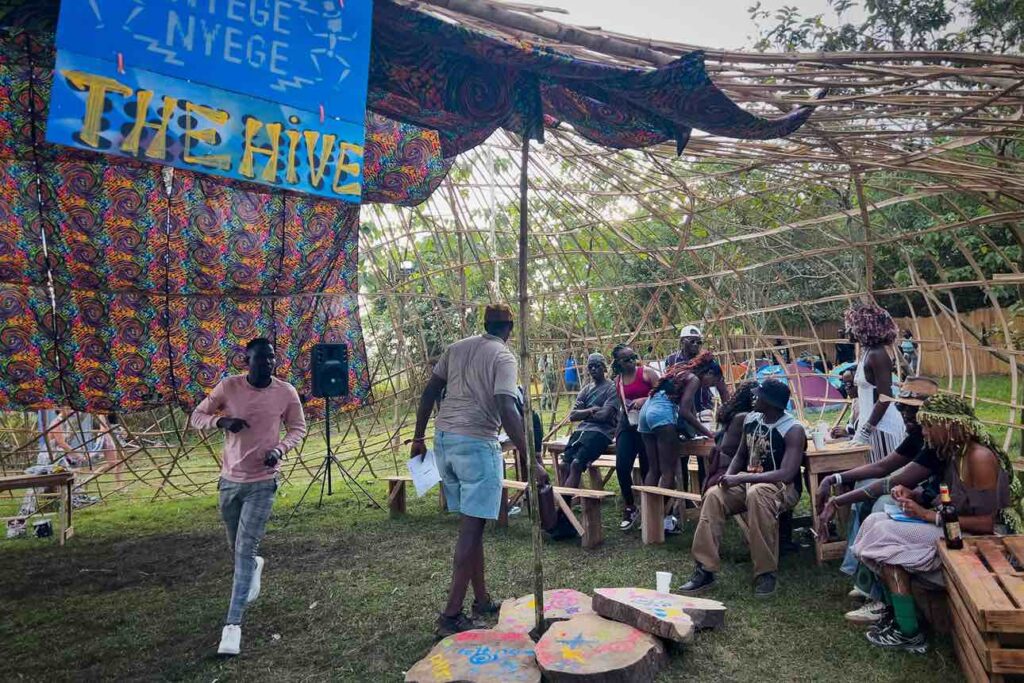
The Hive provided a daytime space for workshops, talks, and informal meetups. Ambassador Albjerg, attending her first full Nyege Nyege, called it “an innovation” to complement the festival’s nighttime revelry.
Highlights included:
• A workshop turning festival trash into art, spotlighting waste management
• A mental wellness session using dance to process emotions
• A Danish rapper teaching multilingual rhymes to Ugandan youth
The programming also reflected a deeper investment in local capacity.
“We’ve been working with Ugandan youth on how to present these sessions—training them and sharing our knowledge on how to create formats that work well in a festival setting,” said Kara Djurhuus, Head of Philanthropy at Roskilde Festival. “It’s not just about the content, but about building the skills to shape and deliver it.”
Roskilde’s Legacy Meets Uganda’s Future
Denmark’s collaboration draws on decades of experience from Roskilde Festival, Europe’s largest non-profit music festival. Founded in 1971 by two Danish high-schoolers inspired by Woodstock, Roskilde now channels over €2 million annually into emerging artists, women in music, and humanitarian causes.
“We supported the Incubator for Community Arts, which is back at the villa in Kampala, helping more women come into music,” Jurhus shared. “And we’ve had more than 20 artists from the Nyege Nyege label and community play at Roskilde. We really value that bond and collaboration.”
The Roskilde model, where local vendors, youth groups, and farmers benefit directly from festival activity, also resonated with local leaders.
“We spoke to the mayor of this area on the opening day,” Albjerg noted. “His wish is that Nyege Nyege boosts the local economy. I really think that working with the Roskilde model can do that, where you focus on local vendors, local produce, and all the farmers around here who sell their products.”
Sharing Blueprints on Greener Festivals
Beyond music and mentorship, the partnership is also shaping how festivals think about sustainability.
Roskilde’s green model, which includes zero diesel, plant-rich menus, upcycled materials, and reusable camping gear, offers a blueprint for African festivals looking to modernize while reducing environmental impact.
“We phased out all diesel generators, run entirely on green energy, and serve plant-rich food to show that sustainable can still be delicious,” said Jurhus. “We don’t build with new materials…we upcycle everything. And instead of people bringing tents and throwing them away, we introduced a rental system for camping gear. Nyege Nyege is already doing some of the same things.”
Nyege Nyege has adopted a no-plastic policy, upcycled installations, and local food sourcing. And more green interventions are expected as the partnership evolves.
“It’s a great example of how a festival platform can also be educational,” Jurhus added. “You’re not just entertaining people, you’re showing them what’s possible.”
2026 and Beyond
By 2026, the partnership aims to expand:
• Artist residencies and mentorships
• Production support for musicians, filmmakers, and visual artists
• Access to equipment, rehearsal spaces, and experienced producers
It’s a vision rooted in collaboration, innovation, and resilience amid push to make Uganda’s creative sector an engine of economic empowerment.
And for Denmark and Roskilde, Uganda offers a model of openness and creative energy.
“You don’t have to reinvent the wheel. Learn from each other,” Ambassador Albjerg said. Come to Nyege Nyege.”