
Tanzania’s Helium Bet Enters a Critical Testing Phase at Southern Rukwa Project




As global demand for helium surges, driven by AI, semiconductors, and supply volatility, Tanzania edges closer to becoming a key supplier, with Helium One’s latest milestone at the ITW-1 well.
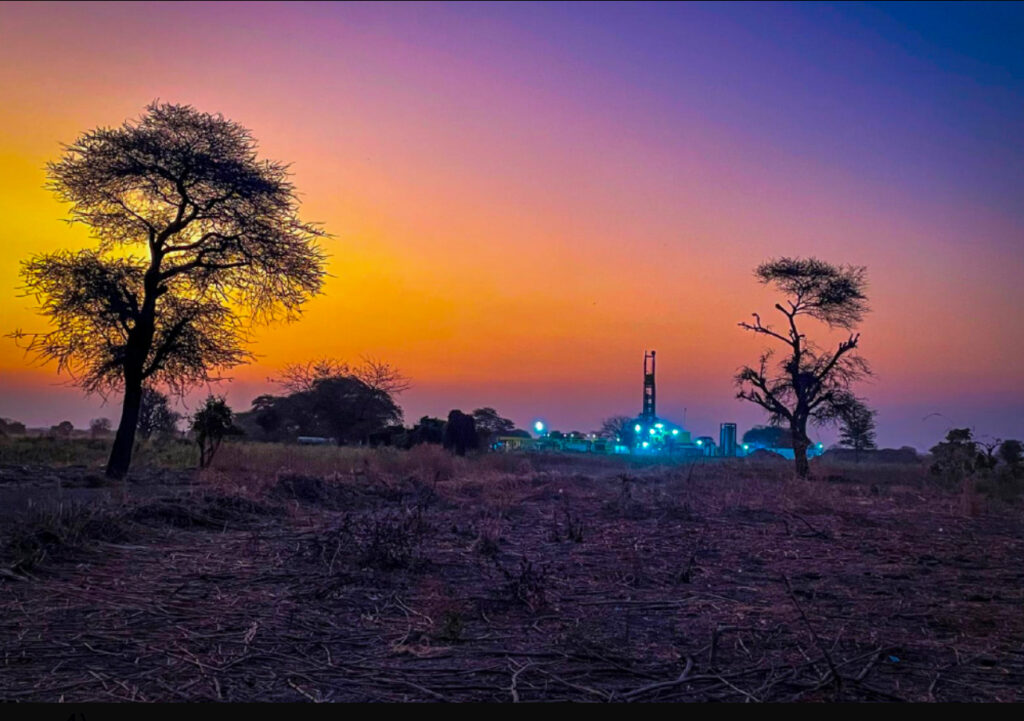
Helium One Global, the British energy producer pioneering helium development in Africa, has entered a critical new phase in its southern Rukwa Helium Project in Tanzania, after it commenced Electrical Submersible Pump (ESP) testing at its ITW-1 well.
The company announced on January 19 that it has completed wireline logging and fully mobilized equipment and personnel to the site. With all downhole tools and surface control systems verified, the ESP assembly is now being deployed to evaluate deeper geological zones, specifically the fractured Basement and Karoo intervals. These zones are believed to hold the highest helium potential in the region.
“This testing phase is designed to increase flow rates and enhance helium production,” the company said in a statement. “It will allow us to better understand the commercial viability of these deeper targets.”
The testing is expected to take two to three weeks, after which Helium One will conduct a final function test before activating the pump and opening the well.
A Flagship Project
The Southern Rukwa Project, situated within the southern Rukwa Rift Basin, is Helium One’s flagship asset in Tanzania. The company’s 2023-2024 drilling campaign confirmed a helium discovery at the Itumbula West-1 (ITW-1) well, marking an important shift from exploration to appraisal and development.
In the third quarter of 2024, an extended well test at ITW-1 achieved a continuous surface flow of gas containing 5.5% helium, an unusually high concentration by global standards.
The results prompted Helium One to apply for a mining license, which was formally granted in July 2025 by the Tanzania Mining Commission. The awarded license spans 480 km², giving the company a substantial operational footprint in one of East Africa’s most promising helium basins.
The Bet on Helium
Helium is a critical enabler of the technologies shaping the 21st century from MRI machines and space exploration to quantum computing and, increasingly, semiconductor manufacturing.
According to IDTechEx, a global research firm focused on emerging technologies, helium has been designated a critical mineral in both the EU and Canada. Its unique properties, which include, thermal conductivity, chemical inertness, and high diffusivity, make it indispensable in the production of advanced chips used in AI, data centers, and high-performance computing.
“With the growth of AI workloads, there is a commensurate requirement for high-performance chips such as GPUs and TPUs,” IDTechEx notes. These in turn “rely on cutting-edge fabrication technologies” that depend heavily on helium.”
The firm forecasts a fivefold increase in helium demand from the semiconductor sector over the next decade, with total helium demand across all applications expected to nearly double—from 176 million cubic meters in 2024 to 322 million cubic meters by 2035.
Strategic Opportunity for Tanzania
Tanzania’s Rukwa Basin is uniquely positioned to meet this rising demand, having emerged as one of the most promising untapped helium reserves globally.
Unlike most helium production, which occurs as a by-product of natural gas extraction, Rukwa’s helium is considered primary, meaning it exists independently of hydrocarbons. This makes it cleaner to extract, more sustainable, and potentially more attractive as countries and investors increasingly weigh environmental considerations alongside commercial returns.
The global helium market has also long been plagued by chronic supply volatility, with four major shortages since 2005 disrupting availability and spiking prices. In the words of IDTechEx, “Although supply is currently stable, it is a market that is known for its chronic volatility. As a result, new helium exploration efforts are emerging.”
Tanzania Highlights Africa’s Role in Critical Resources
Helium One’s progress in Tanzania is part of a broader trend pointing to Africa’s growing importance in the global race for critical minerals and gases. From cobalt in the DRC to lithium in Zimbabwe and now helium in Tanzania, the continent is increasingly central to the technologies of the future.
The company will be betting on its track record to fully succeed in Tanzania. It holds a 50% stake in the Galactica-Pegasus helium development project in Colorado, USA, where first helium gas was achieved in December 2025.
If ESP testing at ITW-1 confirms viable helium flow rates, Helium One could move toward pilot production, potentially unlocking a new revenue stream for Tanzania, and reshaping the global helium market.