
DRC Mining Guard Aims to Secure Critical Minerals and Attract Global Investment




New paramilitary force seeks to stabilize mining provinces, curb smuggling, and reassure investors as demand for cobalt and lithium surges.
By Samuel Okocha
The Democratic Republic of Congo (DRC) announced it is launching a $100 million paramilitary “Mining Guard” to secure its mineral supply chain, as the Central African country works to attract foreign capital and strengthen its position in the global minerals market.
The initiative aims to deploy 3,000 armed personnel by December 2026, scaling to 20,000 by 2028.
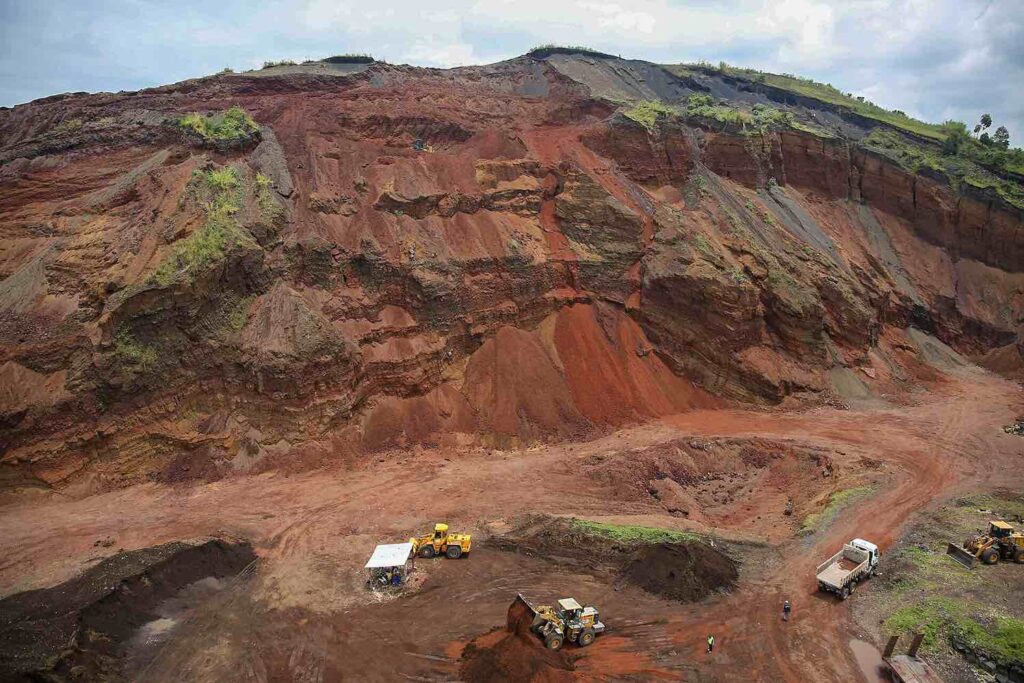
The DRC Mining Guard is expected to secure mining sites, processing facilities and export hubs to curb smuggling that has weakened cobalt, copper and gold output. It will operate across all 22 mining provinces and replace the existing mining police force, with responsibilities extending to protecting cargo transportation nationwide.
An initial investment of about $100 million, according to the government, has been earmarked to cover training and equipment for recruits.
“The Mining Guard will clean up the entire sector in the DR Congo by eliminating practices contrary to good governance, transparency, and mineral traceability,” Inspector General of Mines Rafael Kabengele said in a statement.
The move builds on a December 2025 partnership between Kinshasa and Washington, granting US companies priority access to Congolese mining assets, contingent on commitments to improve security and the business environment. That same month, the DRC and Rwanda ratified a US‑brokered agreement aimed at ending conflict in eastern Congo.
While Kinshasa linked the Mining Guard to “strategic partnerships” with the US and UAE, the US Embassy in Kinshasa clarified, “the US government is not funding any units to patrol or guard mines in the Congo.”
Protracted instability has been a major stumbling block to investment in the DRC, Africa’s mineral‑rich and second‑largest nation by land mass. The new force is expected to help mitigate those risks.
“A big part of driving investment in the DRC will require de‑risking commercial assets,” said Gracelin Baskaran, director of the Critical Minerals Security Program at the Center for Strategic and International Studies in Washington, according to Financial Times’ report.
“For investors to come in, and inject billions of dollars, particularly in greenfield assets, will require great confidence that the asset is protected.”
The initiative comes as global demand for battery metals like cobalt and lithium continues to surge, driven by EV adoption, energy storage demand and advanced technologies.
The broader critical minerals market, valued at around $391 billion in 2025, is projected to surpass $715 billion by 2035 as electrification and infrastructure investments accelerate.
The DRC, holding some of the world’s largest reserves, is betting on the success of its $100 million security overhaul as part of efforts to attract foreign capital and cement its place in the global minerals market.
Gold Supply Agreement
The security push also coincides with growing trade links to the UAE.
Paradigm Holdings, a UAE‑based investment group, recently signed a gold supply agreement with Kinshasa, its third government‑backed deal in Africa in two years.
The company, which has been expanding into key international resource markets, is also developing refineries in Morocco, Rwanda and Cape Verde, part of a strategy to capture more value closer to extraction before final processing in the UAE.
“With three government partnerships now in place and new refinery projects underway, we are building a scalable, long‑term supply network that connects directly back into the UAE’s role as a global trading centre,” said Paradigm founder Steven Hawkins.