
East Africa to Lead Africa’s Growth in 2026




African Development Bank sees continent’s expansion slowing to 4.2% amid global headwinds, with East Africa still the fastest‑growing region.
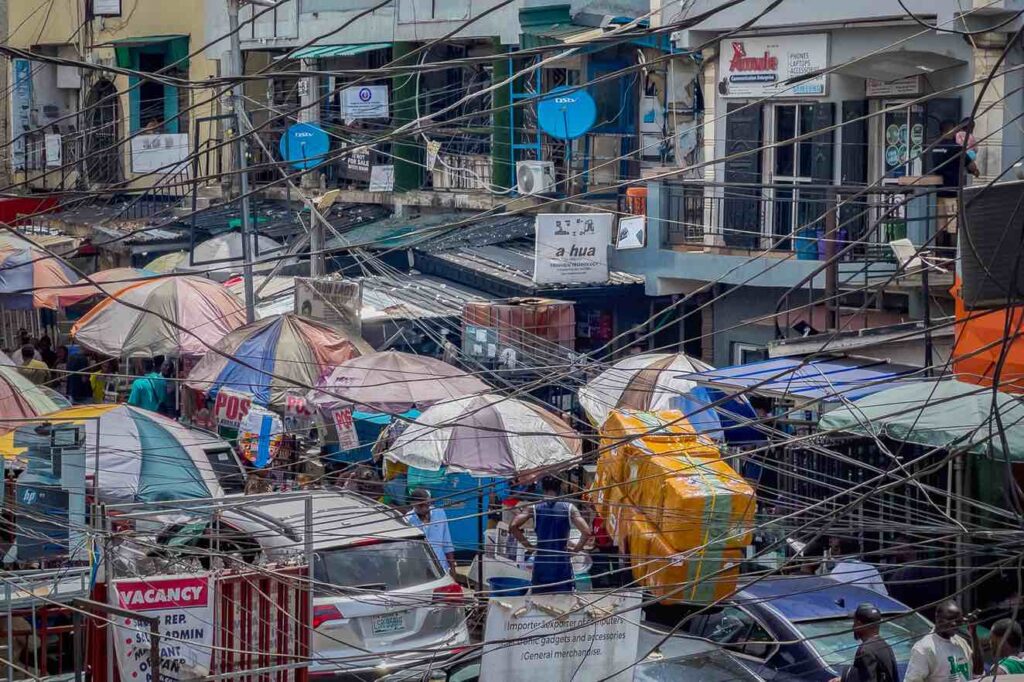
Economic activities unfold with shoppers and sellers at the Computer Village market in Lagos, Nigeria. Photographer: Samuel Okocha/Maarifaah
By Samuel Okocha
East Africa will remain Africa’s fastest-growing region in 2026, even as the continent’s overall expansion slows slightly, according to the African Development Bank’s 2026 African Economic Outlook.
Africa’s economy is projected to grow 4.2% in 2026, down from 4.4% in 2025, before rebounding to 4.4% in 2027. The bank said the outlook reflects resilience despite geopolitical tensions, tighter global financial conditions and supply chain disruptions.
East Africa is expected to ease to 5.9% growth in 2026 from 6.6% in 2025, before recovering to 6.4% in 2027. Rwanda and Uganda are among the region’s fastest‑growing economies.
Rwanda’s real GDP rose to 9.4% in 2025 from 7.2% in 2024, driven by services, construction, manufacturing and agriculture, with growth projected at 7.0% in 2026 before rising to 7.4% in 2027. In Uganda, the economy expanded 6.7% in 2025, supported by services and industry, and is forecast at 6.2% in 2026 and 8.0% in 2027, driven by investment in the extractive sector, start of oil production expected in 2026/27, and agro‑processing.
West Africa is forecast at 4.7%, North Africa at 4.0%, Central Africa at 3.8% and Southern Africa at 2.1%, making it the region’s weakest performer.
The AfDB said stronger agriculture, higher commodity prices, improved macroeconomic management and ongoing reforms supported growth in 2025. But it warned that sustaining faster and more inclusive expansion will require much deeper capital mobilization.
“Achieving sustained and inclusive growth will require a substantial increase in investment,” AfDB President Sidi Ould Tah said in the report’s foreword.
“Africa must raise annual growth to 7 percent or higher, sustained over decades, to enable large-scale job creation and accelerated poverty reduction.”
He said Africa would need to lift capital stock growth from about 3.3% now to roughly 8.7% annually by 2030. The bank said better resource mobilization and more efficient spending could unlock up to $1.43 trillion in additional annual financing, above the estimated $1.3 trillion development-financing gap.
According to the report, that potential could come from improved revenue collection, deeper capital markets, more public-private partnerships, diaspora financing and better use of natural capital.
It added that nearly $469 billion remains untapped because of weaknesses in tax compliance, administration and policy design, while more than 40% of public investment is lost to inefficiencies.