
Energy of the Sun Bolsters Planned $750m Solar Mini‑Grid Push in Africa




U.S. developer aims to connect 2.1m households of national grids as Africa’s solar installations grow 54% in 2025
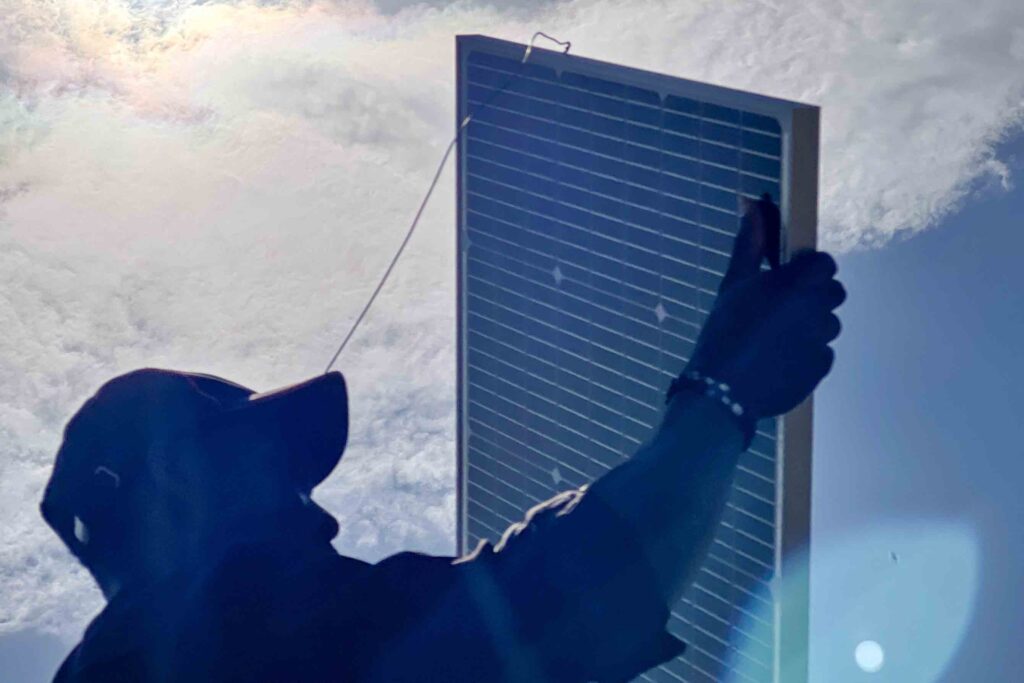
Renewvia Energy, a U.S.-based developer and operator of clean energy infrastructure, plans to invest $750m in solar mini-grids in four countries across east and central Africa, as the demand for solar rises amid efforts to close one of the world’s electricity access gaps.
Mini-grids, small solar power plants complete with electricity storage, are becoming common place for underserved communities in a continent where 600 million people, more than half of the population, still lack electricity.
The plan by Renewvia aims to connect 2.1m households and businesses that aren’t on national grids in
Uganda, Rwanda, Ethiopia, and the Democratic Republic of Congo, CEO Trey Jarrard told Bloomberg in an interview.
The plan builds on Renewvia’s work in Kenya and Nigeria. Earlier this year, Renewvia got $10 million from private equity firm Claritas Capital for projects in both countries, as private capital begin to flow into mini-grids alongside money from development banks.
Growing Solar Use in Africa
Africa’s solar installations rose 54% in 2025 to 4.5GW, the fastest growth yet, according to the Global Solar Council.
“Solar + storage is the hope of Africa,” said Sonia Dunlop, CEO of the Global Solar Council. “This is the technology that can bring energy access, sustainable development, green growth and resilience to natural disasters and extreme weather.”
According to the Council, most of Africa’s solar capacity lies utility-scale projects at 56%, but small, distributed systems (44%) continues to expand and underestimated because they are harder to track.
Financing Clean Energy
In March, the African Development Bank’s Sustainable Energy Fund for Africa said it will more than double funding to $2.5bn over two years.
The money will go to decentralized projects as well as larger ones, as blended finance funds make the sector less risky for investors worried about currency swings, weak grids, and unclear regulations.
Harnessing Solar for Power
Despite its immense potential, solar power in Africa remains a nascent and uneven market. According to the International Energy Agency (IEA), Africa boasts 60% of the world’s best solar resources, yet its solar generation capacity stands at a mere 1%.
That said, the outlook for solar power in Africa remains bright, with the opportunity to leapfrog to a low-carbon and decentralised energy system.
The IEA estimates solar power has the potential to contribute 15% of Africa’s electricity by 2030 and an impressive 30% by 2040 under the Africa Case scenario, which assumes the successful implementation of the African Union’s Agenda 2063 and the United Nations’ Sustainable Development Goals.