Eni approves Baleine Phase 3 as Côte d’Ivoire’s biggest oil discovery looks towards 150,000 bpd




The project is expected to increase oil and gas output at Baleine, with all gas earmarked for the domestic market as Côte d’Ivoire seeks to bolster its energy security.
By Samuel Okocha
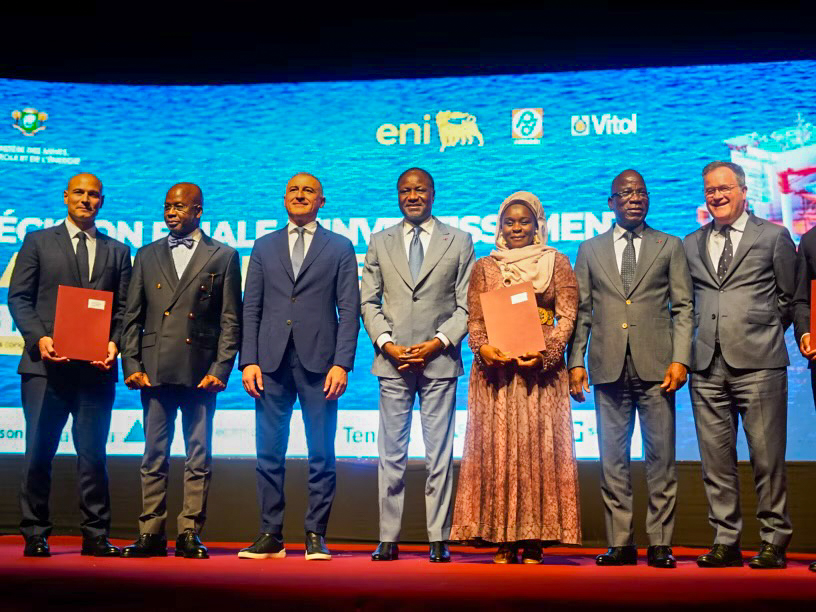
Eni and its partners Petroci, Côte d’Ivoire’s national oil company, and Vitol, a Swiss-based Dutch multinational energy and commodity trading company, have approved the final investment decision for Baleine Phase 3, as the west African country pushes to fully develop its largest hydrocarbon discovery.
The announcement came during a ceremony in Abidjan attended by Côte d’Ivoire’s Minister of Mines, Petroleum and Energy, Mamadou Sangafowa-Coulibaly. The new phase is expected to increase oil production to 150,000 barrels per day from 60,000, while gas output will rise to 200 million cubic feet per day from 80 million.
“This project reflects our commitment to strengthening energy security, supporting local economic development and advancing a lower-carbon energy future,” Eni’s Chief Executive Officer Claudio Descalzi said in a statement.
Production at Baleine, described as Africa’s first net-zero development, began in August 2023, less than two years after the field was discovered and about 19 months after an earlier investment decision, making it one of the fastest offshore developments in West Africa. The first phase used a refurbished floating production, storage and offloading vessel to process up to 18,000 barrels a day of oil and about 25 million cubic feet a day of gas.
Phase 2, which came on stream in late 2024, was designed to raise output to 50,000 barrels a day and about 70 million cubic feet a day. That phase laid the groundwork for the much larger full-field development now moving ahead.
As the project inches towards full development in Phase 3, Eni says all of the gas produced in Baleine will be allocated to Côte d’Ivoire’s domestic market, helping to support electricity generation, industrial growth and broader energy security. That gives Baleine a strategic role beyond exports, especially as the country seeks to deepen its role in West Africa’s energy map.
Ownership of the field has seen changes in recent months. In September 2025, Eni sold a 30% stake to Vitol, leaving the Italian major with 47.25% as operator, while Vitol holds 30% and Petroci 22.75%.
Azerbaijan’s SOCAR Trading is also set to acquire a 10% stake from Eni, with that transaction pending close after an agreement in January 2026. The entry of SOCAR widens the field’s international partner base and aligns with Eni’s strategy of optimising its upstream portfolio. That strategy, Eni says, allows it to speed up monetization of its exploration discoveries through the divestment of equity stakes.
Eni has operated in Côte d’Ivoire in 2015 and has made both Baleine and Calao discoveries. The company also has interests in other deepwater licences, highlighting its long-term bet on the Ivorian offshore.
The Baleine field has been described as both Côte d’Ivoire’s largest hydrocarbon discovery and the country’s first commercial discovery in two decades, positioning the country as a renewed hot frontier for oil & gas activity in West Africa.