Macron Pledges €23bn for Africa Amid Calls for Financial Reform




France seeks equal partnership as African leaders demand financial reform, debt relief, and continental cooperation
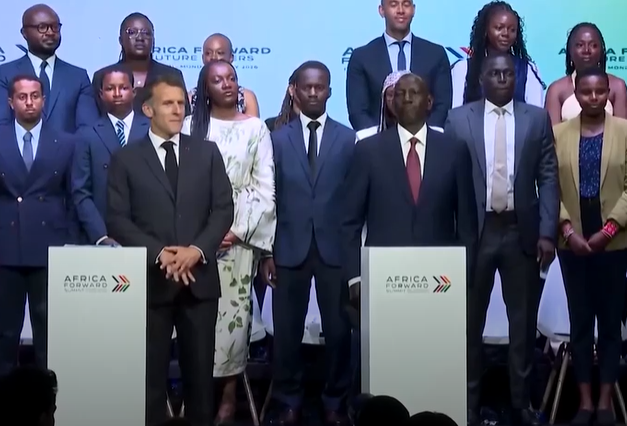
Economic ties between France and English-speaking Africa got a boost after French President Emmanuel Macron announced €23bn ($27bn) of investment for the continent at the two‑day Africa Forward summit in Nairobi. More than thirty African leaders attended the summit co‑hosted with Kenyan President William Ruto.
The package targets energy transition, digital and AI, the maritime economy and agriculture, with €14bn from French public and private entities and €9bn from African investors. Macron said the deals would generate 250,000 direct jobs across France and Africa.
“We are not simply here to invest on the African continent — we need African business leaders to invest in France,” he told delegates, adding that the relationship was now “free of hang‑ups.”
At the summit, CMA CGM, the French shipping and logistics giant headquartered in Marseille, pledged €700m to modernize two terminals at the Port of Mombasa, east Africa’s busiest maritime gateway.
The investment will expand cargo-handling capacity and inland logistics at the port which serves serving Uganda, Rwanda, South Sudan, eastern DRC and Ethiopia.
The summit in Kenya, a British colony until securing independence in 1963, marked France’s first major engagement in a non‑Francophone Africa, after years of strained ties in its former colonies and traditional sphere of influence.
France has faced setbacks in Mali, Burkina Faso and Niger, where military leaders expelled French troops and turned to Russia for security support. On the other hand, Kenya offered Macron a platform to reset relations and sign bilateral deals covering ports, wind energy, rail, water, digital infrastructure and nuclear cooperation.
The summit served as a platform to broaden partnerships and investment deals between France and Africa where anti-French sentiment as risen in recent years in its former colonies in west Africa.
Kenya’s Foreign Minister Musalia Mudavadi called it an “opportunity for Africa to start speaking as one,” and added it was an “opportune moment” for Kenya and France to break away from the “more or less artificial” linguistic barriers stemming from countries being “branded” as Anglophone, Francophone or Lusophone.
Kenya’s President William Ruto used the summit to call for reform of Bretton Woods institutions, arguing that IMF and World Bank rules impose unfairly high borrowing costs on African countries.
“The current international financial system remains structurally unequal,” President Ruto said in his official statement at the summit. The Kenyan president plans to push for global action to improve the continent’s access to credit when he attends the G7 summit next month in Evian-les-Bains at the invitation of France.
“African countries continue to face disproportionately high borrowing costs, constrained access to concessional financing, and distorted risk perceptions that are frequently disconnected from economic realities,” he noted.
Nigerian President Bola Tinubu echoed the concern, warning that the current financial architecture limits access to affordable long‑term capital and keeps African economies dependent on raw commodity exports.
President Tinubu said Nigeria will spend about $11.6bn on debt servicing in 2026, nearly half of projected revenue, a burden he noted was crowding out investment in infrastructure and industry.
Following the Nairobi summit, Macron traveled to Ethiopia on May 13 as part of his East Africa tour. In Addis Ababa, he was scheduled to meet Ethiopian officials and participate in discussions at the African Union headquarters focused on peace, security, trade and regional cooperation.
Ethiopia, Africa’s second‑most populous country and host of the AU, remains a pivotal regional power despite recent conflict in Tigray, making Macron’s visit symbolically significant.
Macron €23bn Africa investment push comes as Africa’s investment landscape grows more competitive. China’s Belt and Road Initiative has poured tens of billions into African infrastructure, while the EU’s Global Gateway programme has earmarked €150bn for Africa.