
How Rwanda Turned Drones Into a National Health Infrastructure




A $150 million Zipline expansion shows how frontier markets can leapfrog weak or expensive legacy systems with technology-led healthcare delivery.
By Samuel Okocha
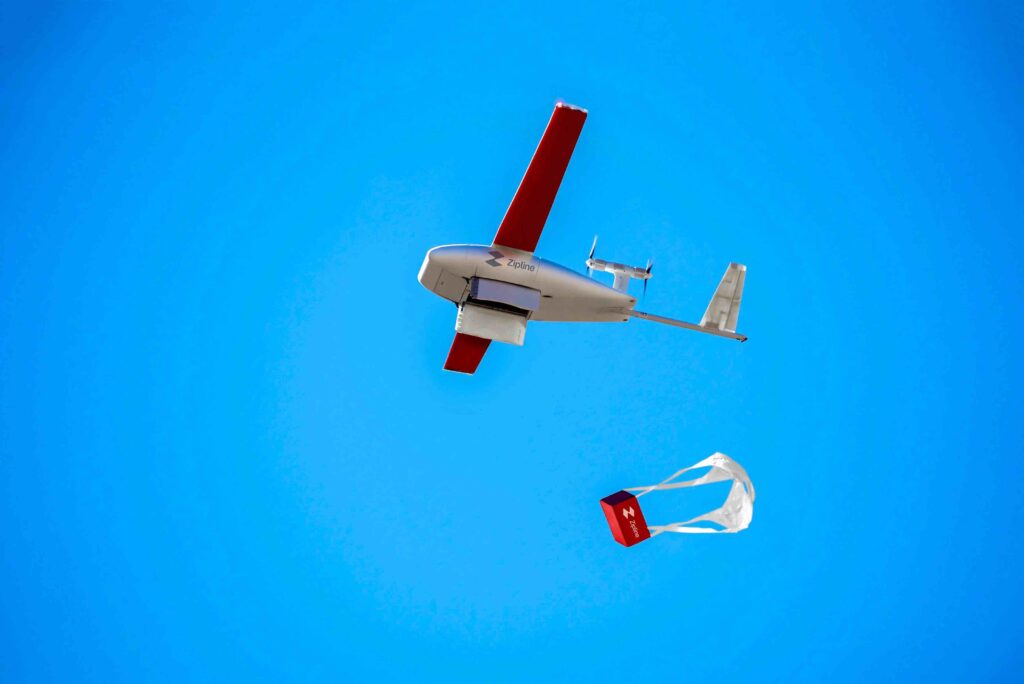
Rwanda signed a $150 million deal with Zipline to expand drone deliveries nationwide, becoming the first country with full autonomous logistics coverage. The U.S. State Department is funding infrastructure, while the East African countty will pay for ongoing operations.
Rwanda pioneered Zipline’s drone service in 2016, initially transporting blood and medicines to rural health facilities. The new expansion builds on health gains recorded since the programme began.
A 2022 study published by researchers at the Wharton School at the University of Pennsylvania found that Zipline-delivered blood reduced nationwide in-hospital mortality from postpartum hemorrhages (PPH), a leading cause of maternal death in sub-Saharan Africa, by 51%.
“We have witnessed the extraordinary impact of drone delivery — saving time, saving money, and saving lives,” Rwanda’s Minister of ICT and Innovation, Paula Ingabire, said in a joint statement.
“With this partnership, we will now expand to urban delivery, bringing these benefits to even more communities. We thank the U.S. Government for supporting Zipline’s expansion and for joining us in building the foundation for Africa’s future in healthcare and innovation.”
Building Africa’s First Urban Drone Delivery Network
The deal will also create Africa’s first urban drone delivery network, enabling fast and highly targeted deliveries in densely populated environments like Kigali, where 40% of Rwanda’s healthcare demand is concentrated.
According to Zipline, the network will be powered by its Platform 2 (P2) system, the same technology currently used in the United States to deliver 100,000 retail and food items with what it described as dinner-plate accuracy to homes, office buildings, hotels, and public spaces.
Rwanda has long positioned itself as Africa’s innovation lab. The deal strengthens that reputation and supports its broader push to use technology to reinforce health systems and economic resilience.
“This is a global first — not because the technology exists, but because the leadership exists,” CEO of Zipline Africa, Caitlin Burton, said.
“That leadership is why the U.S. Government is backing Rwanda’s expansion, and why Zipline is investing beyond our contract in research, technology, and high-skill jobs here in Rwanda. This partnership is setting a new global standard for how innovation should be deployed.”
Drones, Health, and Economic Infrastructure
The expansion also includes a new hub in Karongi, near the Democratic Republic of Congo border, expected to serve 200 health posts and 60 major health facilities, reaching 2.9 million people. Nationwide, the network is projected to cover more than 11 million people and support about 350 jobs.
Beyond healthcare, the expansion also ties into the frame of an economic investment.
The World Bank has warned that underfunded health systems can slow economic growth and reduce productivity, estimating losses of billions annually. Investments in health, it says, drive broader growth and job creation, an argument that underpins Rwanda’s drone strategy.
Can Larger African Countries Replicate Rwanda’s Model?
The Rwanda drone healthcare reflects a broader frontier-market strategy where adopting cutting-edge technology can help leapfrog weak or expensive legacy infrastructure. From GSM-driven telecom expansion to mobile money-led financial inclusion, African countries have shown how new ways of doing things can bypass old constrained systems.
Scaling a similar nationwide drone network beyond Rwanda’s compact geography will be harder for larger countries such as Nigeria.
Still, tailored solutions have proven possible. During the Covid-19 pandemic, Kaduna state, in northern Nigeria, partnered with Zipline to support medical logistics, highlighting the potential for sub-national deployment models.
Zipline, which began operations in Rwanda delivering blood and medical supplies, has since expanded into food, retail, agriculture and animal health products. The company now operates across four continents and eight countries, including Rwanda, Ghana, Nigeria, Côte d’Ivoire and Kenya.