
Spiro Raises $215 Million to Expand EV Infrastructure Across Africa




Equity round backed by European and African investors to grow battery‑swapping network and support regional expansion.
By Samuel Okocha
African electric vehicle firm Spiro has raised $215 million in equity to expand its battery‑swapping network and EV infrastructure, the company said at the start of the month.
The round was backed by European and African investors, including Denmark’s Impact Fund, reflecting growing interest in Africa’s clean transport and energy sectors. Spiro did not disclose its valuation.
“This past year marked a defining milestone for Spiro,” said Gagan Gupta, Spiro founder and Equitane chair, said in a company statement.
“Across seven active markets, our deployment of 100,000 electric vehicles and 2,500 smart‑swap stations has turned sustainable mobility into an affordable, everyday reality.”
The raise extends Spiro’s funding runway. In February 2026, the company secured $50 million in debt from Afreximbank, and two investors Nithio and Africa Go Green Fund managed by Cygnum Capital. That followed a landmark $100 million investment in October 2025, Africa’s largest electric mobility deal at the time
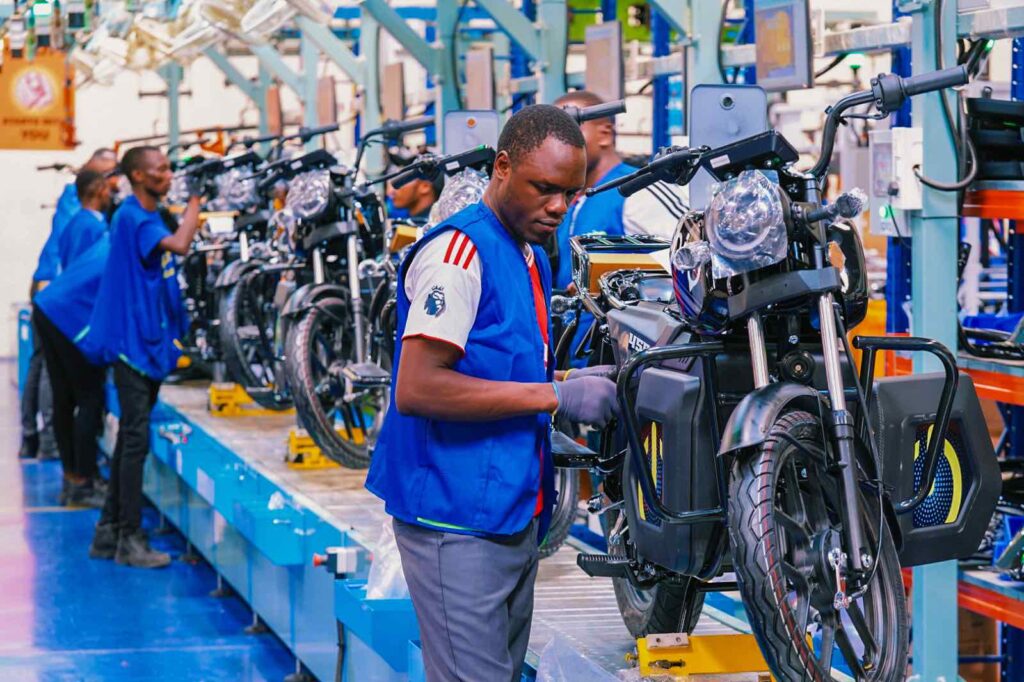
Spiro operates in Kenya, Rwanda, Uganda, Togo, Benin, Nigeria and Cameroon. The latest funding will be used to grow its swap network, strengthen local assembly, and support entry into the Democratic Republic of Congo and Ethiopia, where a 2024 ban on non-electric private vehicle imports creates early policy support. Gupta said the next phase aims to reach millions of riders across the continent.
The raise comes as Africa’s electric motorcycle market is projected to reach 180,000–220,000 units in 2026, a year‑on‑year increase of about 90–130%, according to the Africa Two‑Wheeler Market Analysis Report by Chinese manufacturer Ronghao Vehicle Co. The overall Africa two‑wheeler market is expected to reach $5.55 billion this year and $7.29 billion by 2031, according to Mordor Intelligence.
Economics are shifting too. A study in Nature Energy found EVs from scooters to minibuses could cost less to own than gas-powered vehicles in Africa by 2040. That projection suggests that current investments in EV infrastructure may align with longer‑term shifts in transport economics.
The financing also comes as African countries contend with the rising cost of fossil fuel imports, seek to strengthen energy security, and work to modernize urban transport systems.